20 years focus on Filter Press!
Excellent quality & 7x24 hours After-sales Service
Tel & WhatsApp+8613932818978
20 years focus on Filter Press!
Excellent quality & 7x24 hours After-sales Service

Technology
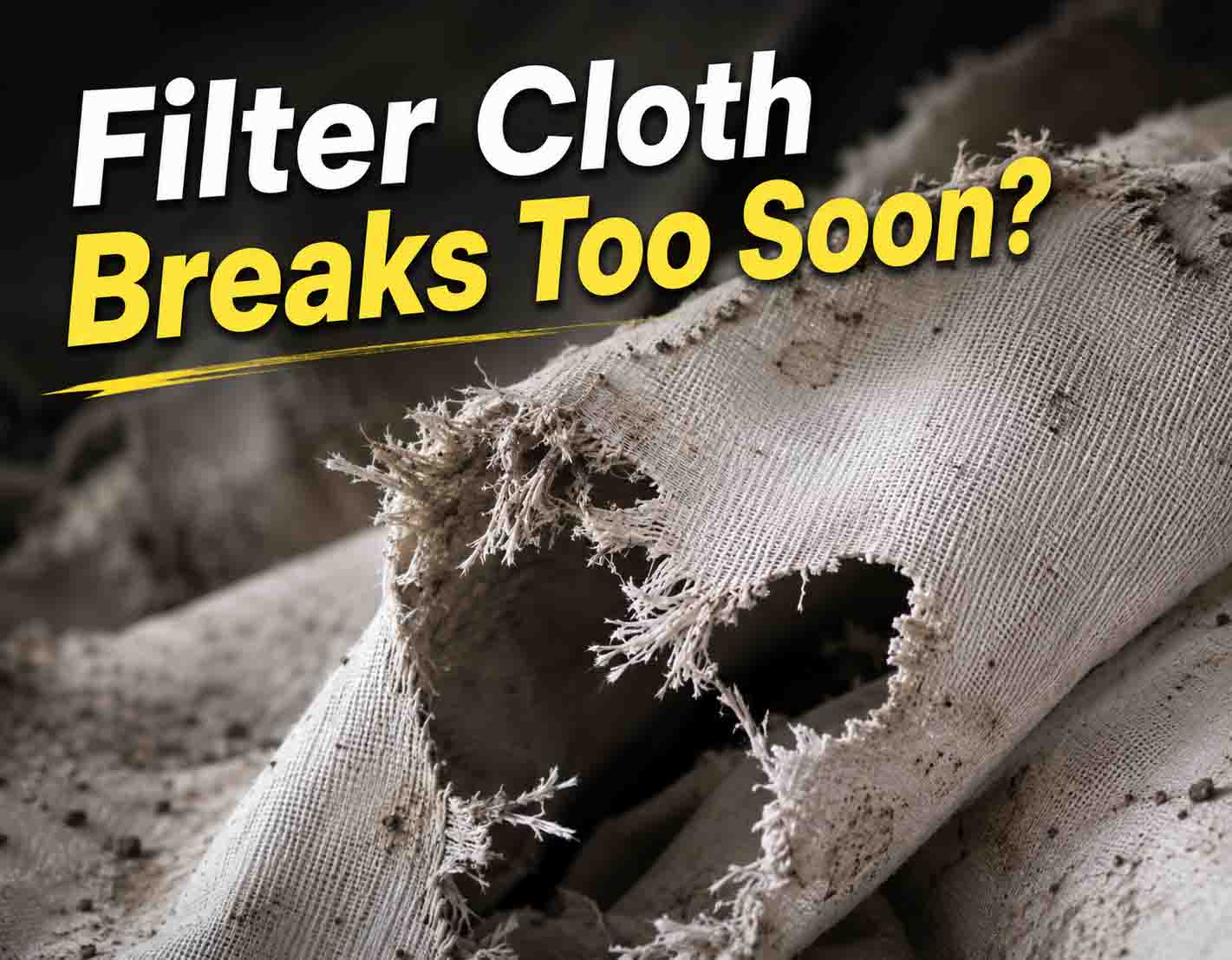
Filter cloth is one of the most important consumable components in a filter press. However, premature filter cloth damage is often not caused by poor cloth quality alone. ...
Tel & WhatsApp+8613932818978
Product Details
Filter cloth is one of the most important consumable components in a filter press. However, premature filter cloth damage is often not caused by poor cloth quality alone. Incorrect operating conditions, damaged filter plates, excessive pressure, and improper material selection can significantly shorten filter cloth service life.
Here are 5 common mistakes that can cause filter cloth to fail much earlier than expected.
1. Excessive Feeding Pressure Can Tear the Filter Cloth
Excessive feeding pressure places continuous stress on the filter cloth fibers. When slurry pressure becomes too high, especially with sudden pressure fluctuations, the cloth can be repeatedly stretched and impacted. This may cause cracks, edge damage, or even sudden tearing.
Stable and properly controlled feeding pressure is essential for protecting the filter cloth and maintaining consistent filtration performance.
2. Hard Particles Can Wear Through the Cloth
Sludge containing sand, gravel, metal particles, or other abrasive solids can act like sandpaper against the filter cloth. During repeated filtration cycles, high-hardness particles continuously rub against the cloth surface and gradually wear down the fibers.
For abrasive slurry applications, selecting a filter cloth with suitable strength and wear resistance is critical.
3. Damaged Filter Plates Can Cut the Cloth
A filter cloth can also be damaged by the filter plate itself. Burrs, cracks, sharp edges, or damaged plate surfaces may directly scratch or cut the cloth during operation.
Deformed filter plates can also create uneven pressure distribution, causing excessive local stress. Regular inspection and maintenance of filter plates can significantly reduce this risk.
4. Excessive Pressing Time Accelerates Aging
Long-term compression under high pressure can keep filter cloth fibers in a highly stressed condition. If the pressing cycle is unnecessarily long, the cloth may gradually lose flexibility and become brittle.
Optimizing filtration and pressing cycles according to the material and equipment conditions can help extend cloth service life.
5. The Wrong Filter Cloth Material Can Cause Rapid Failure
Different materials require different filter cloth types. Choosing the wrong material for a specific chemical or temperature environment can result in rapid degradation.
For example, polyester cloth may not be suitable for certain strongly acidic conditions, while strong alkaline or high-temperature applications require carefully selected cloth materials with appropriate chemical and thermal resistance.
How Can You Extend Filter Cloth Service Life?
Longer filter cloth life starts with the right combination of cloth material, slurry characteristics, feeding pressure, filter plate condition, and operating parameters.
At KERTE Filter Press, we provide filter cloth and filter press solutions designed for demanding applications such as mining tailings, concentrates, wastewater, and industrial sludge. Choosing the right filtration configuration can help reduce unplanned downtime, lower replacement costs, and maintain stable filtration performance.
The right filter cloth is not simply a consumable—it is an important part of your filtration system.
Previous post: First Quantum's Taca Taca Copper Project Stake Sale Reshapes Global Copper Market
Next post: Vale Targets Gold & Rare Earths Hidden in Mining Waste
Related content